You’ve launched a B2B or niche independent podcast, and you want to get it known while building a loyal audience? The podcast landscape is more competitive than ever: thousands of new shows are launched, and capturing listeners’ attention requires a structured marketing approach.
To stand out from the crowd, you’ll need to multiply your visibility channels, optimize distribution, engage your listeners to turn them into ambassadors, and leverage new tools like push notifications. A podcast that combines a growing audience with strong loyalty benefits not only from better visibility (algorithms recommend high-engagement shows more), but also paves the way for monetization: nearly half of weekly listeners have already purchased a product they heard about in a podcast—proof that loyalty has real commercial value.
So here are concrete tips to improve your podcast’s visibility, increase retention and listening stats, and integrate Web Push Notifications into your strategy to boost engagement and actions from your audience.
- Improve your podcast’s visibility: multichannel distribution and repurposed content
- Comparison table of distribution and promotion channels
- Retention and listening stats: turn listeners into ambassadors
- Integrate Web Push into your podcast strategy
- From curious listener to loyal fan: build long-term podcast success
Improve your podcast’s visibility: multichannel distribution and repurposed content
To gain visibility, your podcast must be present wherever your potential listeners are—while also offering content around your episodes to attract attention. The first step is to distribute your podcast across all listening platforms. Make sure your show is available on Spotify, Apple Podcasts, Deezer, Google Podcasts, Amazon Music, YouTube Music and all the major apps listeners use (TuneIn, Pocket Casts, Podcast Addict, etc.).
Being present “everywhere” maximizes your chances of being discovered, because each listener has their own listening habits. Note that Apple Podcasts remains very popular thanks to its native installation on iPhones, and Spotify is essential for a large share of the audience.
Publishing on YouTube has become just as essential: in 2023, YouTube moved into the #1 spot among the most-used podcast platforms, confirming that distributing in video or audiogram format on YouTube can significantly expand your audience. Don’t forget podcast web directories that categorize shows by topic: listing your podcast on dedicated sites (for example the Podcast France directory for French-language podcasts) gives you additional visibility among people actively looking for new shows.
Optimize your podcast’s SEO across different platforms
To gain visibility, you need to take care of your podcast’s SEO, both inside listening apps and on the web. Start by optimizing episode titles and descriptions: be clear, compelling, and include the right keywords. This improves your presence in platform search results—what Ausha calls Podcast Search Optimization (PSO). Nearly 40% of listeners discover new content via the search bar in their listening app.
Some hosting tools even suggest popular keywords in your niche to boost your ranking. Don’t neglect your web presence either: a dedicated website or blog for your podcast, with one page per episode, can make a huge difference. Include a summary and, if possible, a full transcript of the audio. This not only helps you rank better on Google, but also makes your content more accessible to everyone (reading, accessibility, sharing…).
Finally, think “multi-format”: an episode shouldn’t live only as audio. Repurpose it into an audiogram, a YouTube video, or written content for social media or your newsletter. Each version strengthens your visibility while feeding your SEO strategy.
Promote your episodes on social media
To expand your audience, it’s essential to share your episodes on social media, where your listeners spend the most time. Each platform has its own codes, and it’s better to adapt your posts rather than copy and paste the same message everywhere. According to a CSA/Havas study, 42% of listeners discover a podcast each week via social media, especially on YouTube, Facebook, and Instagram.
The idea is simple: each episode can be promoted in multiple formats. On Instagram or TikTok, create a short 30-second video teaser. On LinkedIn (perfect for B2B podcasts), share a punchy quote from your guest or start a debate around an excerpt. On X, you can publish an infographic, a thread, or a standout quote.
This multi-format approach maximizes your reach: a single episode becomes living content that circulates differently on each network. You reach a variety of profiles while strengthening your presence.
Also consider creating a hashtag unique to your podcast. It makes visibility easier, encourages sharing, and structures discussions around your universe.
Leverage your newsletter or email
Don’t forget your direct channels like email or newsletters. Do you have a strong subscriber base? Let them know every time a new episode drops. It’s one of the most effective ways to stay connected with your community.
A well-crafted newsletter can summarize episode highlights, share exclusive content (like recommendations or behind-the-scenes anecdotes), and provide a direct link to listen. Adding an embedded audio player or a button to your website makes access even easier.
Also think about highlighting older episodes: a “this week’s episode to (re)discover” or “most-listened episode of the month” box grabs attention and encourages deeper exploration. In short, email remains an excellent way to keep your podcast alive over time.
Comparison table of distribution and promotion channels
Below is a table summarizing the main channels to use to boost your podcast’s visibility, along with their goals and benefits.
| Channel | Main goal | Visibility benefits |
|---|---|---|
| Listening platforms (Spotify, Apple Podcasts, etc.) |
Distribute your podcast widely across all apps used by listeners. | Maximize reach and discoverability (search, rankings). Easier access: everyone listens on their favorite app. |
| Podcast directory (e.g., Podcast France) |
Get listed on sites that catalog podcasts by topic. | Extra exposure among active searchers. Improves SEO via backlinks. |
| Website / Blog (SEO) |
Attract organic traffic (episode pages, articles) via search engines. | Reach new audiences with transcripts and SEO-optimized show notes. Brand control + conversions. |
| Social media (Instagram, LinkedIn, X…) |
Promote episodes through social sharing and drive engagement. | Reach a broader community and generate interaction (comments, shares), increasing awareness. |
| YouTube | Distribute as illustrated audio / video on the most-viewed platform. | Access a massive audience beyond audio apps and benefit from the recommendation algorithm. |
| Newsletter / Email | Notify subscribers about new episodes and share exclusive content. | Retention and qualified traffic; emails ensure direct visibility (often higher than social media). |
| Collaborations (cross-promotion) |
Exchange visibility with other podcasters or media. | Additional targeted audience and budget-free growth via recommendations. |
By combining all these levers, you significantly increase your chances of boosting visibility. Ideally, set up a well-oiled promotion routine.
With each new episode, make sure it’s distributed everywhere thanks to an all-in-one host like Ausha or Anchor, which can automate distribution. Then plan multichannel communication over several days. For example: announcement Tuesday morning on social media, newsletter on Wednesday, blog post on Thursday, LinkedIn reminder on Friday. This consistent cadence, well balanced, multiplies opportunities to capture attention.
Also consider inviting recognized experts or speakers: they add credibility to your content and often share the episode with their own audience, naturally extending your reach.
Finally, be consistent. Publishing every week at the same time builds a habit for your listeners. No need to find the perfect moment: it’s consistency, more than timing, that will make the difference in the long run.
Retention and listening stats: turn listeners into ambassadors
Attracting new listeners isn’t enough: you also need to retain those you’ve won over, encourage them to listen to every new episode, and engage with your podcast. A loyal audience is the key to long-term success: podcasts that cultivate a strong base of recurring listeners benefit from better recommendations on platforms and via word of mouth, fueling audience growth again in a virtuous circle.
The ultimate goal is to turn your listeners into engaged fans who listen to every new episode and talk about it around them.
Polish your content to increase episode completion rate
To keep attention all the way to the end, you need to polish the content of your episodes. The completion rate—the average percentage listened per episode—is a key indicator of perceived quality. The good signal: listeners stay until the end.
Use Spotify or Apple Podcasts analytics tools to spot where your audience drops off. This can reveal an episode that’s too long, an intro that’s too slow, or a pace that fades. Always start strong: an anecdote, a direct question, or a clear promise makes people want to stay.
Break dense topics into several short episodes
A format between 20 and 30 minutes is often a good balance, even if some long formats remain very effective. The key is to watch your numbers and adjust accordingly.
Finally, know that most listens happen within 48 hours after release. So be consistent with your publication dates and times and build anticipation: at the end of an episode, clearly tease what’s coming next.
Build a connection with your audience
An engaged listener shouldn’t be a passive spectator: they should feel involved in your universe. To do that, invite participation. Ask them to leave a 5-star review and/or a comment on their usual listening app. These reviews strengthen your credibility and boost your ranking: platforms often feature the highest-rated podcasts. Tip: mention at the end of the episode the people who left a review—this encourages others to do the same.
Word of mouth is your best ally
96% of listeners recommend podcasts to people close to them. Encourage this reflex by adding a simple “If you enjoyed this episode, share it with someone.” This kind of message works wonderfully to turn a fan into a true ambassador.
Also create a more direct connection. Ask a question at the end of the episode (“What did you think of the topic?” or “What should we cover next time?”) and invite responses via your social media or email. Some podcasters go even further: reading testimonials live, co-hosted episodes with a listener, Q&A sessions with community-submitted questions…
Involving your listeners means building a real community around your podcast—one that’s loyal, active, and engaged.
Set up a routine around your podcast
To build loyalty, create a clear routine around your podcast. When a listener knows exactly when you publish, it’s easy to integrate listening into their habits. A weekly cadence—every Monday morning, for example—becomes an anticipated appointment. Some formats reinforce this habit even more: the “Friday debrief,” the “Tuesday tip,” or any other recurring concept helps create that ritual. It’s proven: the higher your publishing frequency, the more often listeners come back. A daily podcast averages 4.2 listens per listener each month, versus 2.3 for a monthly release.
Create a connection beyond listening
To strengthen attachment, think about connection off-air. Create a community space where listeners can interact with each other and with you: a Facebook group, a Discord server, a Slack channel, or a dedicated forum. These discussion spaces extend the life of episodes and turn your show into a collective experience. Your audience doesn’t just listen to a podcast: they join a vibrant, tight-knit community around a shared universe.
You can also create highlight moments like live sessions or interactive webinars. These real-time meetups break the virtual barrier, provide concrete feedback, and recognize your most engaged fans. Little by little, you’re building not just a podcast, but a truly active and loyal circle around your voice.
Analyze your listening stats closely and adjust your strategy accordingly
Platforms like Spotify and Apple provide dashboards rich with insights about your audience. Track key indicators (KPIs) to understand what’s working and what can be improved.
Here’s a table of a few important KPIs to monitor:
| KPI (Metric) | Role and interpretation |
|---|---|
| Number of listens (plays/downloads) | A basic indicator of the podcast’s reach, to track over time. Per-episode growth indicates an expanding audience. Watch launch momentum: 50 to 60% of an episode’s listens happen within 2 days of release. |
| Unique listeners (per episode or period) | Measures the number of distinct people who listen. Evaluates the true audience size (vs. total listens). Helps distinguish new listeners from returning listeners and track retention. |
| Subscribers / Followers | Number of listeners subscribed on listening platforms (or via RSS feed). This loyal audience receives notifications for each new episode. Subscriber growth shows you’re converting curious listeners into regular fans. |
| Completion rate | The average percentage of each episode listened to until the end. A high rate (80 to 100%) signals captivating content. A low rate (e.g., 50%) flags drop-offs: identify when listeners leave to improve pacing, format, or structure. |
| Retention rate (recurrence) | A long-term retention indicator: e.g., average episodes listened per listener over a month, or % of listeners who also listen to the next episode. The higher it is, the more you turn the initial audience into regulars (often correlated with publishing frequency). |
| Reviews and shares | Number of reviews, ratings, and comments (listening platforms) as well as shares on social media. These aren’t “pure” audience metrics, but excellent indicators of qualitative engagement. A high volume of positive reviews and shares improves discoverability and trust for new listeners. |
Analyzing your stats means understanding your audience better so you can create content that truly resonates. For example, if you notice that your 30-minute interviews retain 90% of listeners, while longer solo episodes plateau at 60%, that says a lot about what your audience prefers. The same applies to demographic data: imagine your core audience is 25–34-year-olds living in the Paris region—you can adjust cultural references or schedule releases mid-week, when they’re most active listeners.
This information helps you build a profile of your ideal listener, refine your topics, and adapt your tone, format, or frequency. It’s a key lever to strengthen loyalty and evolve your podcast in the right direction.
Align your performance indicators with your goals
Looking for awareness? Focus on listens, subscribers, and rankings. Have a business goal? Track leads generated via trackable links, promo codes, or forms mentioned in episodes. Want to build a community? Monitor subscriber growth on social media and engagement rate around your podcast-related posts.
Hosting platforms (like Ausha, Anchor, or Spotify for Podcasters) provide comprehensive dashboards to track the essentials. Other tools like Chartable or Podtrac help you benchmark your podcast against industry trends. Keep in mind it’s change over time that matters: measure, test, adjust, repeat. This background work is what will help you grow your podcast sustainably while staying aligned with your listeners’ expectations.
Integrate Web Push into your podcast strategy
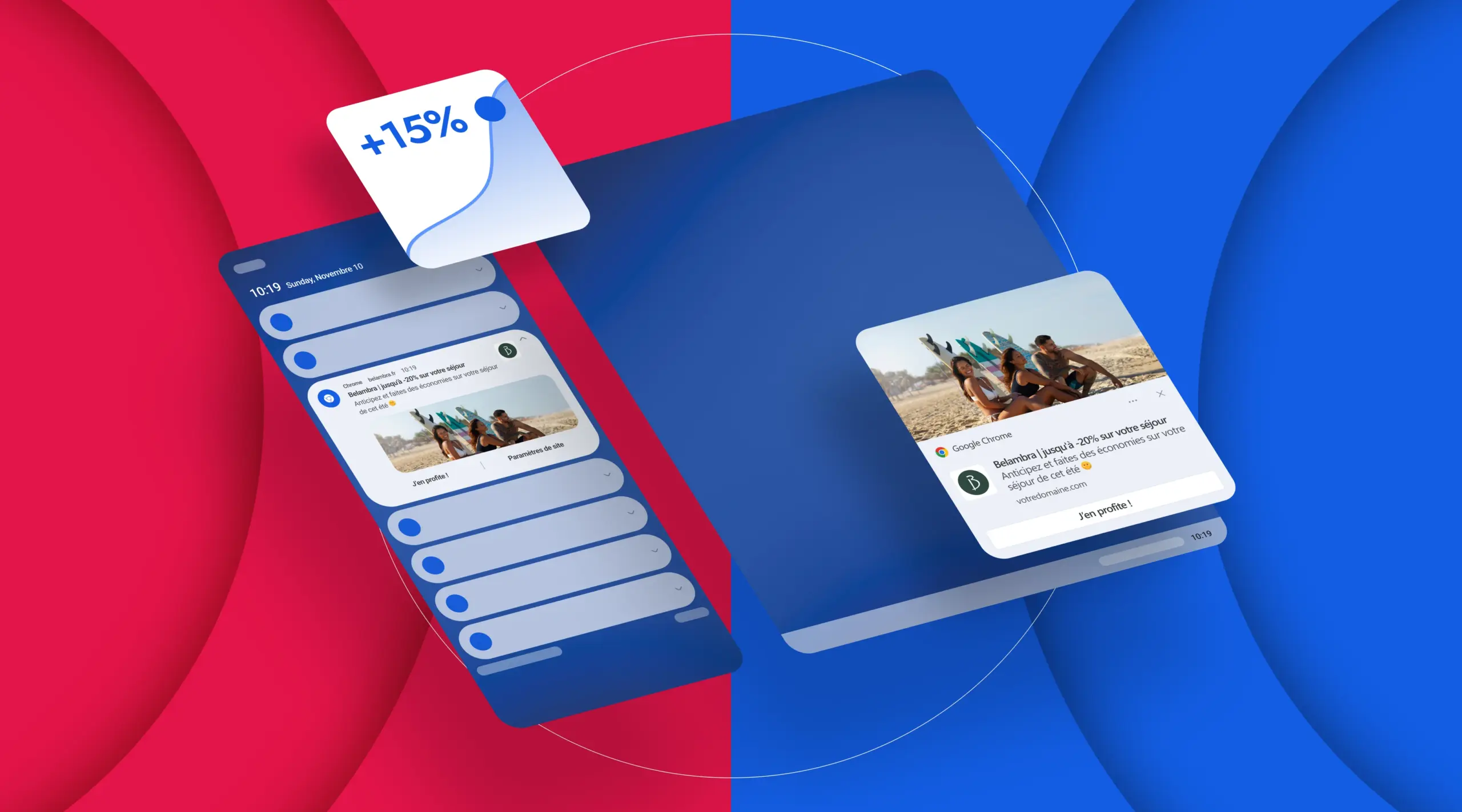
Web Push is a small clickable message sent by your website that appears directly on your listeners’ screens (desktop or mobile). And the best part: they don’t even need to open their podcast app or inbox to see your message.
Imagine this: a new episode drops, and your audience instantly receives an alert, even if they’re browsing another website. Unlike social posts (often buried in the feed) or emails (opened… or not), a Web Push message is visible immediately, with zero effort.
From a performance standpoint, it’s a small revolution: about 15% of your website visitors opt in to receive these notifications. That means if you have 10,000 visitors, you can reach around 1,500 push subscribers every time a new episode is released. Result: more visibility, more listens in the first hours after launch, and most importantly, a direct and powerful connection with your most engaged fans.
Promote your new episode with push notifications
If you have a website for your podcast—or even just a dedicated page for each episode—you already have the perfect ground to use Web Push. Setup is simple: a push notification service, a few lines of code, or a plugin is enough to display a small message asking visitors if they want to receive notifications. Many will happily accept: it’s quick, anonymous, no email required, and they’ll stay informed about all your new releases.
As soon as a new episode is live, you can send an alert like:
“🎧 New episode available: how to break through on Spotify in 2026”
With a single click, your subscribers land on the episode page or directly on the listening platform. Result: an immediate audience spike, qualified traffic, and listens within the first hour.
Re-engage your older episodes
“🔄 (Re)discover: our most-listened episode this month”
Or highlight bonus content:
“🎁 Exclusive: a bonus interview available only on our website”
This sparks interest, generates additional listens, and can help you promote content reserved for your most engaged listeners.
Get started with this ready-to-use scenario
You host a podcast about digital marketing. Each week, you publish an episode and use Web Push to announce it to your visitors. On Tuesday, a notification grabs attention:
“New 🎙 – 5 social media trends for 2026 (don’t miss tip #3!)”
Clicks roll in, listens skyrocket, and a week later you send a second message:
“📊 Download the strategy template mentioned in our latest podcast”
This offer leads to a landing page where the user exchanges their email for a useful resource. You’ve just generated qualified leads with no friction—by leveraging the power of Web Push.
Adrena’tips: this lever fits perfectly into a business strategy: post-episode follow-up, highlighting premium content, or calls to action (book a meeting, subscribe, etc.). Used in moderation and with relevance, Web Push becomes a direct, efficient, and appreciated channel for your subscribers.
All without being intrusive: messages are consent-based, targeted, and clear, which builds trust. And unlike email, Web Push also reaches people who don’t share their details but agree to stay connected to your universe.
From curious listener to loyal fan: build long-term podcast success
Succeeding with a podcast is no longer just about publishing a great episode. The real challenge is to keep your content alive far beyond listening: attract, retain, convert. Visibility is still the first lever to activate. Distribute your episodes on the right platforms, use social formats adapted to each channel, and explore direct channels like email or Web Push—every action matters to reach new listeners where they’re already active.
But growth isn’t only about volume. It’s also about the quality of the relationship you build with your audience. By creating regular appointments, giving listeners a voice, and fostering a community vibe, you turn simple listeners into true ambassadors. These loyal fans don’t just listen: they come back, recommend, and share. They take your podcast further than you could on your own.
The good news? Today you have powerful, accessible tools to amplify that impact—from Web Push notifications to editorial newsletters, from social teasers to engaging landing pages. Each lever can be orchestrated to build a coherent, visible, high-performing audio strategy. Whether your goal is awareness, monetization, or influence, the key is to stay tuned to your audience, test, adjust, and above all, keep going.
Your podcast deserves to be heard. Give it the means to grow, episode after episode.