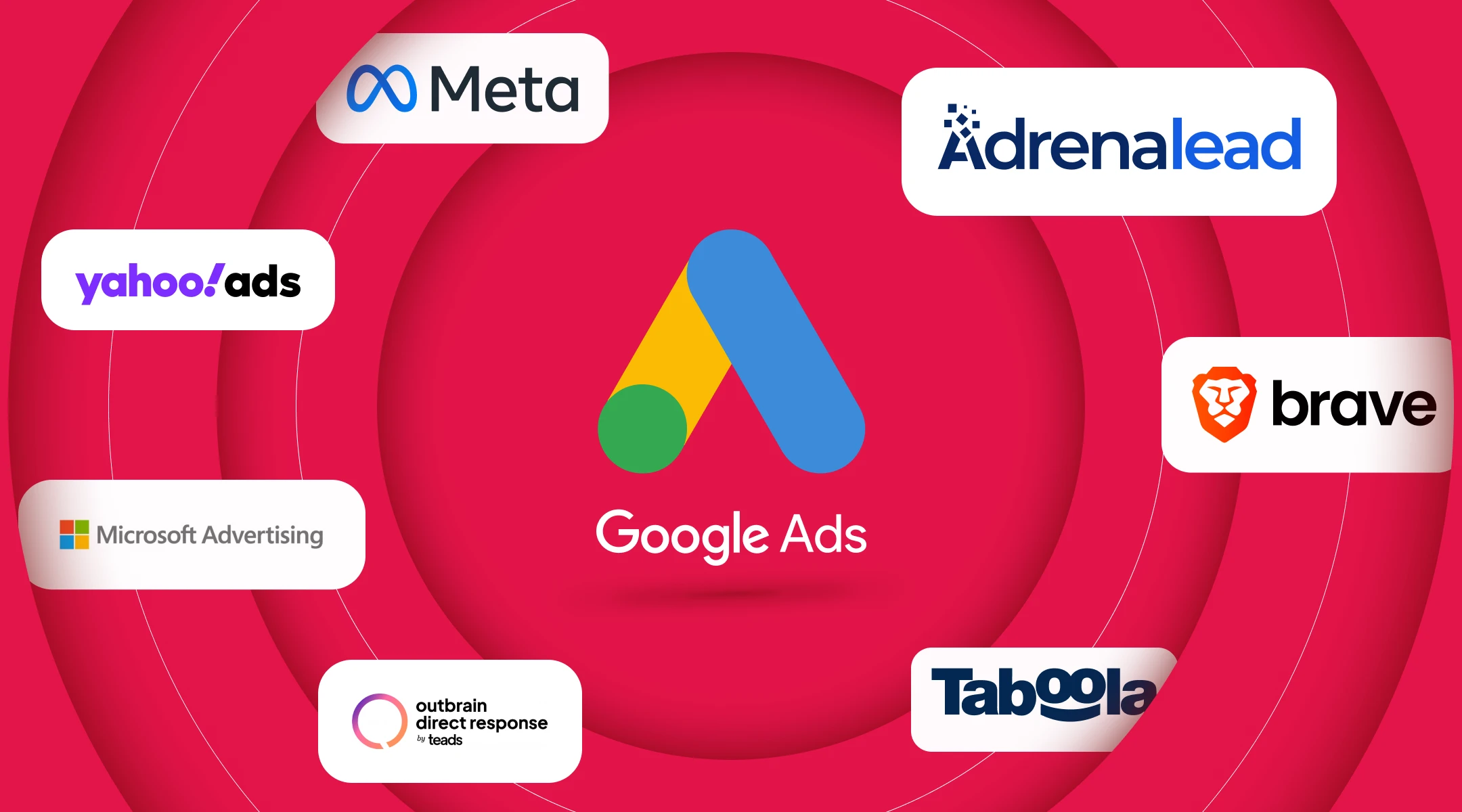
Google Ads, formerly AdWords, remains the most widely used advertising platform among advertisers, but it is no longer the only high-performing option today. Cost per click keeps climbing every year, keyword competition keeps intensifying, and more and more agencies are looking to reduce their dependency on a single player.
Diversifying online acquisition channels, beyond paid search alone, is no longer optional — it is a strategic necessity. This guide presents the best alternatives to Google Ads available today, with their costs, formats, targeting specifics, and the contexts in which each one proves most relevant.
Whether you are looking for a solution for a limited budget, a complementary channel to reach an audience Google no longer covers effectively, or an alternative independent of Big Tech, you will find here a complete and up-to-date overview of these advertising options.
Why look for an alternative to Google Ads?
A constantly rising cost per click
The average CPC on Google Ads increases year after year, driven by heightened competition between advertisers on the same queries. In certain highly contested sectors (real estate, insurance, finance), the cost per click regularly exceeds €10 to €15. This inflation mechanically pushes budgets upward for a lead volume that is often stable, or even declining.
A risky dependency on a single player
Building your entire acquisition strategy on a single platform exposes you to a structural risk: any change to the algorithm, pricing policy, or delivery rules directly impacts the company’s revenue. Diversifying your channels helps smooth out this risk.
Audiences saturated by traditional advertising
Internet users are exposed to several thousand advertising messages a day on average. Classic display and search formats suffer from declining attention and falling click-through rates. New advertising formats, less intrusive and more respectful of consent, are gaining relevance.
The rise of adblockers
Between 30 and 40% of internet users now browse with an active ad blocker, according to the sector’s most recent studies. A significant share of display and search campaigns therefore never reaches its target.
The 8 best alternatives to Google Ads
1. Web Push Ads
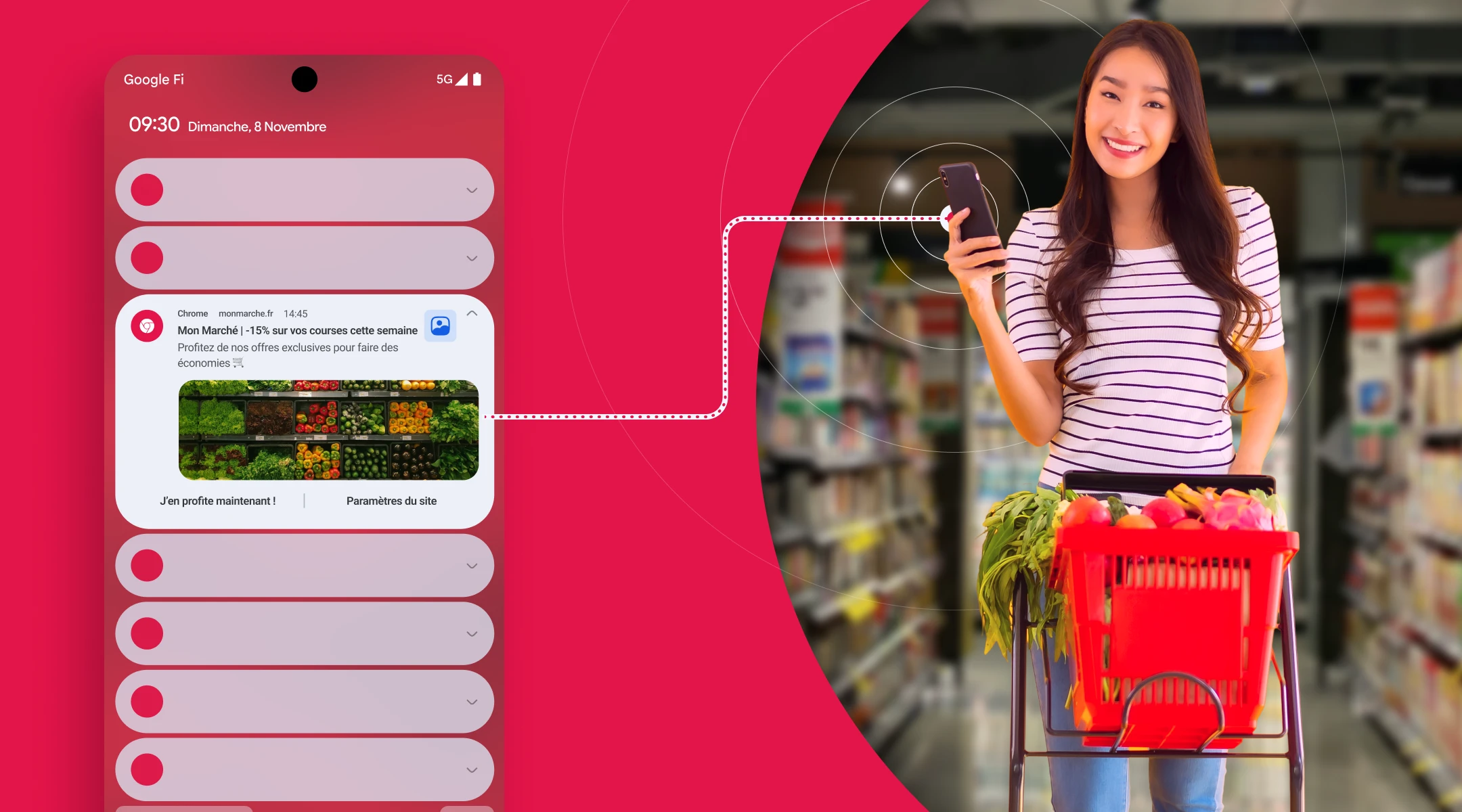
Web Push Ads is an advertising platform that delivers notifications directly to the user’s screen, via their browser, after explicit one-click consent. It is one of the highest-performing and least exploited solutions among advertisers in 2026.
How it works
The user agrees to receive push notifications on a partner site. They then become an addressable opt-in profile, reachable beyond the site where they signed up, through an ecosystem of partner publishers. Adrenalead operates one of the leading European ad networks of this type, with more than 1,500 partner media outlets and more than 60 million opt-in subscribers.
Advantages
- Format not blocked by adblockers, unlike classic display
- 100% opt-in audience, natively GDPR-compliant
- Tiered CPM pricing, from €1 to €3 depending on volume
- Delivery rate close to 99%
- No possible ad fraud, since display is direct on screen
- Independence from major American platforms, with a dedicated affiliate programme for partners
Limitations
- Format less well known among advertisers, requires a discovery and analysis phase
- Inventory volumes vary by geography and sector
Who is it for?
Ideal for advertisers wanting to test a complementary, lower-cost acquisition channel, recapture lost paid search traffic, or diversify their media mix without depending on advertising giants. Alongside traffic generation, this channel also creates new revenue for publishers who join the network. To go further, discover how to generate qualified traffic with Web Push.
2. Microsoft Ads
Microsoft Ads, formerly Bing Ads, is the most direct alternative to Google Ads in terms of format: paid search on keywords, display, and shopping. This search engine holds a modest market share in France but remains relevant in certain B2B sectors and with an older audience.
Advantages
- Interface and logic very close to Google Ads, easy migration
- CPC generally 20 to 30% lower than Google Ads on the same queries
- Less competition on bids
Limitations
- Search volume significantly lower than Google
- Smaller audience, especially on mobile
Who is it for?
B2B advertisers and sectors with an older professional audience often find a good cost-to-conversion ratio on Microsoft Ads.
3. Meta Ads (Facebook and Instagram)
Meta Ads remains the world’s second-largest advertising platform by volume. It allows you to target a very precise audience thanks to Facebook and Instagram’s demographic and behavioural data.
Advantages
- Extremely fine-grained targeting by interests, behaviours, and lookalike audience data
- Varied formats: image, video, carousel, stories, reels — ideal for showcasing your products
- Powerful for brand awareness and retargeting
Limitations
- Continuously rising costs, particularly since changes related to iOS tracking
- Strong dependency on the platform’s moderation and privacy policies
- Declining organic reach, which mechanically pushes paid budgets upward
Who is it for?
Consumer brands with a strong need for interest-based targeting and visual formats, to showcase their products to new audiences.
4. Taboola
This native advertising network delivers sponsored article recommendations at the bottom of pages across thousands of partner media sites.
Advantages
- Massive inventory volume on high-traffic sites and media networks
- Native format, perceived as less intrusive than classic display banners, relevant for promoting articles
- Relevant for driving traffic to a brand page or sponsored content
Limitations
- Image sometimes associated with uneven-quality content (clickbait)
- Click-through rate often low compared to search
Who is it for?
Brands with an editorial strategy looking to generate traffic to articles or informational pages.
5. Outbrain
A direct competitor to Taboola, Outbrain operates on the same principle of native article recommendations across a large publisher network.
Advantages
- Partnerships with premium media sites
- Effective contextual targeting
- Good complement to an editorial strategy
Limitations
- Market very close to Taboola, little real differentiation
- Comparable costs, sometimes higher on certain premium segments
Who is it for?
Advertisers already present on Taboola can test Outbrain in parallel to compare performance on their own audience.
6. LinkedIn Ads
LinkedIn Ads is the reference for B2B targeting, thanks to unique professional criteria: job title, sector, company size, seniority.
Advantages
- B2B targeting unmatched by any other platform
- Formats suited to professional lead generation (native forms)
- Strong credibility with a decision-making audience
Limitations
- CPC among the highest in the advertising market
- Limited volumes compared to Google or Meta
Who is it for?
B2B companies, any software or SaaS publisher targeting specific decision-makers in particular sectors.
7. Yahoo Native Ads
Yahoo (Verizon Media) also offers a native advertising network, delivered on its own portal and through partner publishers. Less used in France than in the United States, this channel remains an option worth testing for English-speaking audiences or international markets.
8. Brave Ads
Brave Ads is the advertising network built into the Brave browser, based on a cryptocurrency reward model (BAT) for users who agree to see non-intrusive ads.
Advantages
- Tech-savvy audience, privacy-conscious
- Non-intrusive format, well accepted by users
- Still low costs, an uncrowded market
Limitations
- Very limited audience volume compared to major networks
- Ecosystem still niche in France
Who is it for?
Tech or crypto brands looking to reach an early-adopter audience, with an experimental rather than volume-driven approach.
Comparison table of Google Ads alternatives
Here is a summary analysis to quickly compare the main options.
| Platform | Main format | Average cost | Targeting | Adblockers |
| Web Push Ads | Browser notification | CPM €1 to €3 | Geographic, affinity, behavioural | Not blocked |
| Microsoft Ads | Search, display | CPC 20-30% below Google | Keywords, demographic | Blocked in display |
| Meta Ads | Image, video, carousel | CPC varies by sector | Interests, behavioural | Partially blocked |
| Taboola | Native content | Low to moderate CPC | Contextual, behavioural | Not blocked |
| Outbrain | Native content | Low to moderate CPC | Contextual | Not blocked |
| LinkedIn Ads | Sponsored, forms | High CPC | Professional (title, sector) | Partially blocked |
| Brave Ads | Browser notification | Very low CPM | Anonymised behavioural | Not applicable |
How to choose the right alternative based on your budget and goals
For a limited budget
Web Push Ads and Brave Ads offer the most accessible entry points, with CPMs significantly lower than traditional networks. Taboola and Outbrain also remain affordable for testing traffic to content.
For precise B2B targeting
LinkedIn Ads remains essential despite its cost, as no other platform offers an equivalent level of precision on professional criteria.
For recapturing already-paid-for SEA traffic
Web Push lets you capture, on an opt-in basis, a portion of visitors who arrived via a search campaign or other paid actions, before they leave the site without converting. It’s a natural complement rather than a pure substitute.
For promoting a time-limited commercial offer
Web Push Ads and Meta Ads allow you to quickly distribute a time-limited offer, with a direct format visible right on the user’s screen.
For local campaigns
Geolocated targeting is particularly relevant with Web Push Ads and Meta Ads, two options that allow you to target a precise catchment area.
For international campaigns
These two giants retain the advantage in terms of global geographic coverage and available inventory volume.
What ad formats do these platforms offer?
Formats vary considerably from one platform to another: text search and shopping on Microsoft Ads, image and video on Meta Ads, system notifications on Web Push, native content on Taboola and Outbrain, native forms on LinkedIn. The format choice should match your objective to get the best results: awareness, traffic generation, or qualified lead generation.
Web Push Ads versus Google Ads: why test this channel first?
Among all the alternatives presented, Web Push Ads stands out for its ability to simultaneously address several limitations of Google Ads: rising costs, ad blocking, dependency on Big Tech, and audience saturation.
Adrenalead has operated this network for several years in Europe, with an independent positioning and a network of more than 1,500 partner media outlets reaching more than 60 million opt-in profiles. Pricing works on a CPM basis, with a tiered rate ranging from €3 down to €1 depending on the scheduled sending volume.
Concrete feedback from the field
Lesfurets.com incorporated Web Push into its channel diversification strategy after years centred on paid search and TV. According to Hélène Suon, digital media and partnerships manager: Web Push allowed them to reach their users through a different channel, with a clear objective of driving site visits and entries into their conversion funnel.
On Verisure’s side, supported by Darwin Agency, results go beyond lead volume alone: quality and conversion rate are at the heart of the tracking. Over one quarter, Darwin Agency measured an incremental lead volume 34% higher thanks to Web Push, compared to levers already in place at Verisure.
Both cases illustrate a common reality for advertisers diversifying into Web Push Ads: this channel does not replace Google Ads, it complements it, by capturing an audience and traffic that traditional levers no longer reach effectively.
What are the most effective alternatives to Google Ads for a limited budget?
Web Push Ads, Taboola, and Outbrain offer the lowest entry tickets, with CPMs or CPCs significantly lower than traditional search engines.
Web Push stands out in particular for its high delivery rate and the absence of ad blocking — since notifications are delivered directly by the browser, they natively bypass adblockers, guaranteeing real visibility across the entire targeted audience.
How do these alternatives compare in terms of reach and targeting?
Google Ads and Meta Ads retain the advantage in raw audience volume — their global reach remains hard to match.
Web Push and LinkedIn make up for it with more precise, more qualitative targeting: geographic or behavioural for Web Push, professional for LinkedIn. These two channels are particularly well suited to advertisers looking to reach a qualified audience rather than maximise raw impression volume.
What ad formats do these alternative platforms offer?
Each platform offers specific formats suited to its use cases:
- Web Push Ads: browser notification (title, text, icon, image, link) — a lightweight, non-intrusive format.
- Microsoft Ads: search and shopping, on Bing and the Microsoft ecosystem.
- Meta Ads: image, carousel, and video on Facebook and Instagram.
- Taboola / Outbrain: native content embedded within partner media editorial pages.
- LinkedIn Ads: sponsored content, lead generation forms, InMail messages.
Can these alternatives be used for local or international campaigns?
Yes, both levels of distribution are possible depending on the platform chosen.
For local targeting, Web Push Ads and Meta Ads are particularly well suited: geolocated targeting allows you to concentrate delivery on a precise catchment area, without wasting budget on out-of-target profiles. For large-scale international distribution, these same two options remain the strongest in terms of geographic coverage and available volume.
What real-world feedback exists on using Web Push as an alternative to Google Ads?
Two use cases concretely illustrate the results obtained:
- Lesfurets.com incorporated Web Push into its acquisition mix to generate qualified traffic to its comparison site, alongside its usual search channels.
- Verisure, supported by Darwin Agency, measured up to 34% additional incremental lead volume thanks to Web Push Ads — a result directly attributable to the channel, isolated from the mix’s other levers.
These results illustrate the positioning of Web Push: not as a replacement for Google Ads, but as a complementary lever capable of generating incremental volume where other channels are saturated or too costly.
Stop relying on a single channel!
Google Ads remains an essential pillar of digital acquisition, but relying on this single channel exposes you to a risk of dependency and continuous cost inflation. Microsoft Ads, Meta Ads, Taboola, Outbrain, LinkedIn Ads, Brave Ads, and Web Push Ads all represent complementary options, each with its own strengths depending on your budget, sector, and objectives.
Web Push Ads positions itself as one of the most relevant alternatives in 2026 for advertisers looking to diversify their media mix at a lower cost, while freeing themselves from the limitations of traditional display: adblockers, saturation, and dependency on Big Tech.
Diversifying acquisition channels is no longer an option reserved for large accounts. It has become a necessity for any advertiser wanting to secure their growth and sustainably optimise their return on investment.